Solar Watering System For Greenhouse Uk
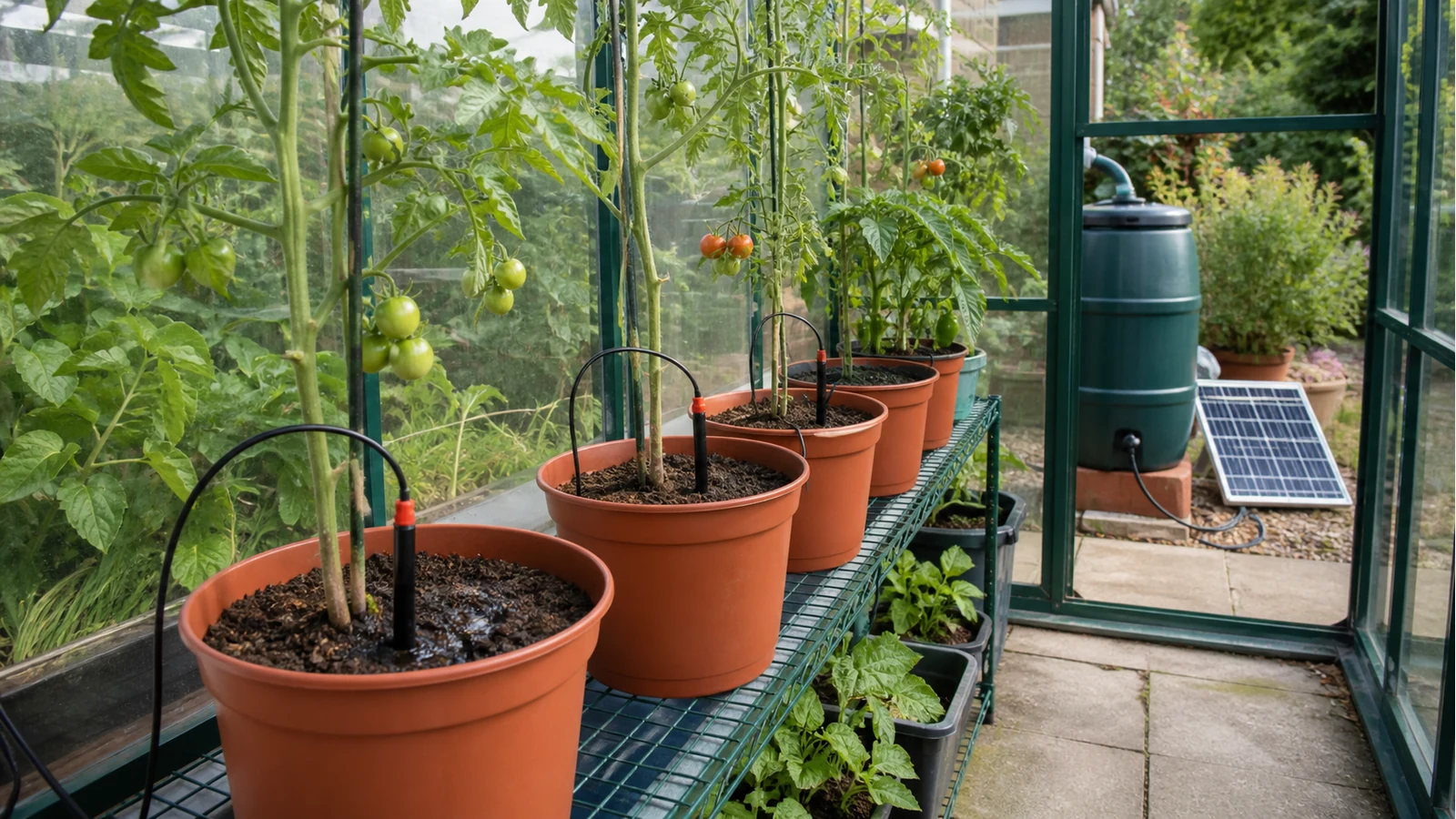
Direct answer: a solar watering system for a UK greenhouse is most useful when the greenhouse has no tap inside, the plants are in pots or grow bags, and a water butt or reservoir can feed a low-pressure drip layout. The solar panel should normally sit where it receives better light than the greenhouse interior, while the drippers sit at root level.
Think of this as a pot-watering schedule tool, not a promise that every plant receives a fixed litre count. Greenhouse watering depends on compost volume, plant size, ventilation, weather and reservoir discipline.
When solar greenhouse watering makes sense
UK greenhouse sellers describe solar irrigation kits that pump from a water butt without a mains tap or power supply, including Halls Greenhouses' solar irrigation kit page. Greenhouse Stores also compares manual watering, tap-based drip systems and solar pump systems in its greenhouse watering guide. The useful dividing line is simple: if you have reliable mains pressure, a tap timer may be simpler; if you have stored water and no convenient socket, solar pump drip is worth considering.
Layout: staging, pots, beds and hanging tomatoes
Start with the plant layout, not the gadget. Pots on staging usually need tidy tubing clipped or weighted so it cannot be snagged. Grow bags need emitters close to each root zone. Soil beds need more caution because one compact kit may not spread water evenly across a long bed. Hanging tomatoes add lift height and support issues, so avoid assuming any pump can raise water indefinitely.
Use one emitter position per root zone as the planning idea, then test. If the far end drips much less than the near end, shorten the run, split the layout, or reduce the number of plants on that circuit.
Schedule cues for UK conditions
| Condition | Practical cue | What to check |
|---|---|---|
| Bright summer spell | Shorter, more frequent watering may suit pots | Compost moisture below the surface |
| Cool shoulder season | Longer gaps are often safer than automatic overwatering | Yellowing leaves, wet compost and poor airflow |
| Before a heatwave | Run the system while you are home | End drippers, reservoir level and panel position |
| Before a holiday | Pre-water by hand, then let the system maintain moisture | Enough stored water for your plant load |
Filtration and butt habits
Stored rainwater can carry grit, leaf fragments and algae. Use the supplied filter or a suitable intake screen, keep the butt covered, and inspect emitters before the hottest part of summer. If the intake sits in sludge, the system will behave like a blocked straw; the pump may run, but the plant still goes dry.
Who should upgrade or avoid a compact kit
Upgrade to a larger or multi-zone system if the greenhouse has many beds, long tube runs, or mixed crops with very different water needs. Avoid relying on a compact solar kit if the greenhouse is shaded all day, if the reservoir cannot be kept filled, or if the plants are high value and you cannot do a supervised test.
For patios and balconies, read the no-tap watering guide. For butt choice and gravity versus pump decisions, see the rainwater butt automatic watering guide.
FAQ
Should the solar panel go inside the greenhouse?
Often no. Glass, shading and staging can reduce useful light. Place the panel where the kit instructions allow and where it receives the best consistent daylight.
Can I water tomatoes at night?
Root-zone drip can reduce wet foliage, but timing still depends on ventilation and compost moisture. Avoid creating constantly wet, stagnant conditions.