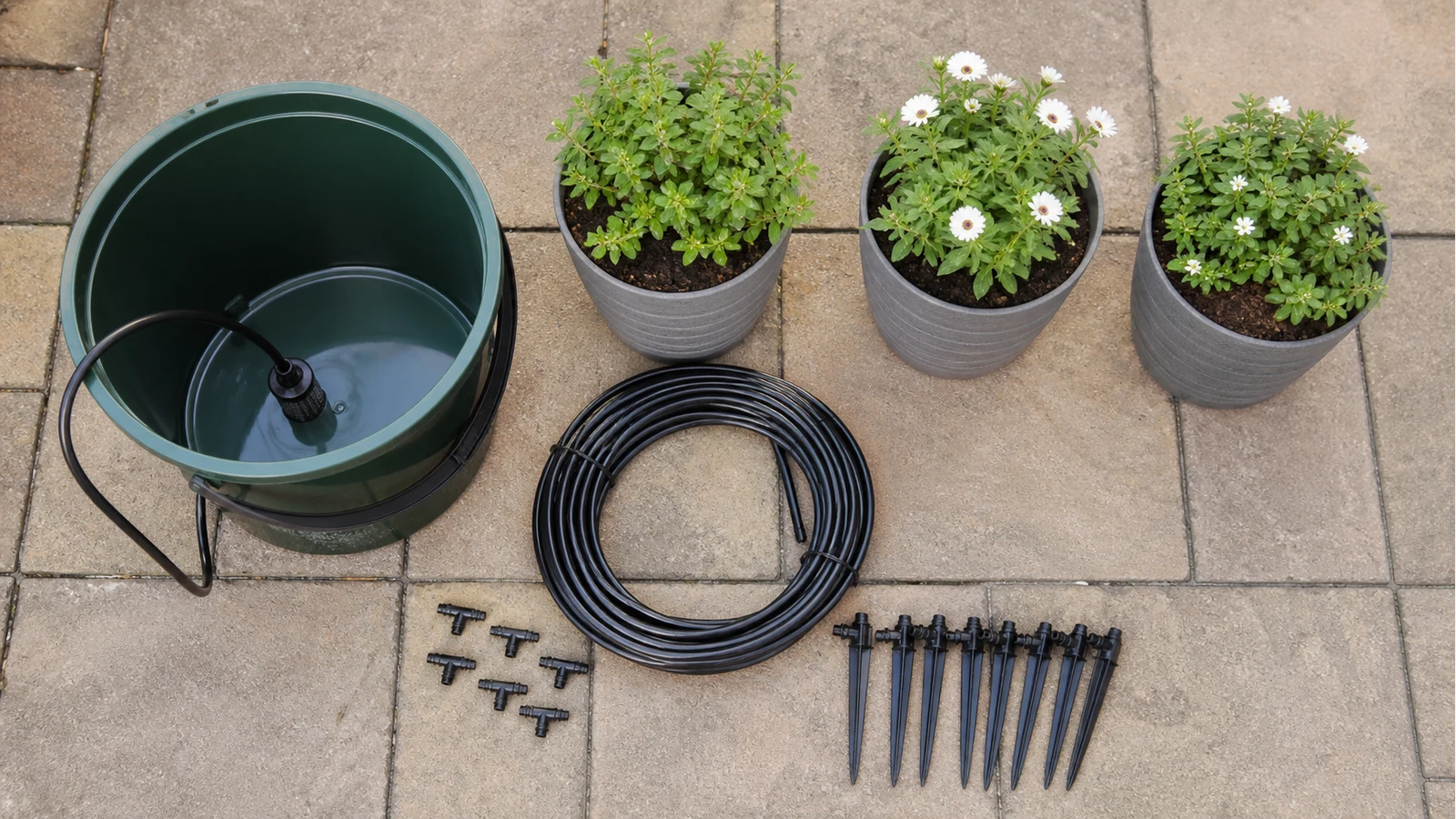
Bucket Fed Drip Irrigation Uk
Direct answer: bucket fed drip irrigation in the UK means using a clean bucket, barrel or water container as the reservoir, then feeding low-pressure drip lines with either a small pump or a gravity-compatible layout. For renters and balcony growers, a pump-fed bucket is usually the simpler tap-free route because it does not depend on mains water pressure.
The basic parts
A working bucket-fed setup needs a container, intake, filter, main microtube, tees or splitters, emitters, stakes and a timer or controller if you want automation. UK listings such as Blumfeldt UK's reservoir-fed irrigation listing describe systems drawing from a reservoir rather than a mains connection. For butt-fed layouts, Water Irrigation's water-butt drip guide is useful because it explains the low-pressure reality of stored water.
Checklist before assembly
- Use a clean, stable container with a lid or cover.
- Keep the intake above sediment and use a filter.
- Start with similar pots so one line is not serving dry tomatoes and damp shade plants at the same time.
- Cut tubing only after placing pots in their real positions.
- Run water through the line before inserting final emitters.
- Check the last dripper during a full cycle, not just the first dripper.
Gravity-fed or pump-fed?
| Route | Use it when | Watch out for |
|---|---|---|
| Gravity-fed bucket | The bucket can sit higher than the pots and every component is low-pressure compatible | Weak flow, uneven runs and incompatible timers |
| Pump-fed bucket | The bucket sits on the floor, balcony or patio and needs to feed several pots | Empty reservoir, blocked filter and poor power placement |
| Tap-fed drip | You have an outdoor tap with reliable pressure | Not suitable for no-tap flats or many water-butt layouts |
Evenness tips
Do not judge the system by whether water appears somewhere. Judge it by whether each intended pot receives a similar useful amount. Keep runs short, avoid sharp bends, and reduce the number of emitters if the final pots are weak. If the setup has adjustable drippers, tune after the tubing is in place, then mark the positions so they are not accidentally changed.
Common failure modes
Clogged emitters, empty reservoirs, kinked microtube and shaded panels are the common reasons a bucket-fed system disappoints. None is mysterious. They are maintenance problems that can be prevented with a covered container, filtered intake, tidy routing and a test day before you leave the house for a weekend.
When not to use bucket fed drip irrigation
Skip this approach for large lawns, long borders needing sprinkler coverage, or systems that must run unattended for a long period without someone confirming water level and flow. A bucket is a flexible reservoir, not an infinite water source.
If your bucket is really a rainwater butt, compare automatic water-butt kits. If the bucket is for a balcony with no tap, see the no outdoor tap guide.
FAQ
Can I fill the bucket indoors?
Yes, if you can carry it safely and store it securely. Many flat growers use an indoor tap to fill a portable reservoir, then let the drip line handle distribution.
Can I add fertiliser to the bucket?
Only if the kit instructions allow it. Nutrients can increase clogging risk, so clean water is the safer default.