Automatic Garden Watering System Explained: A UK Buyer's Guide
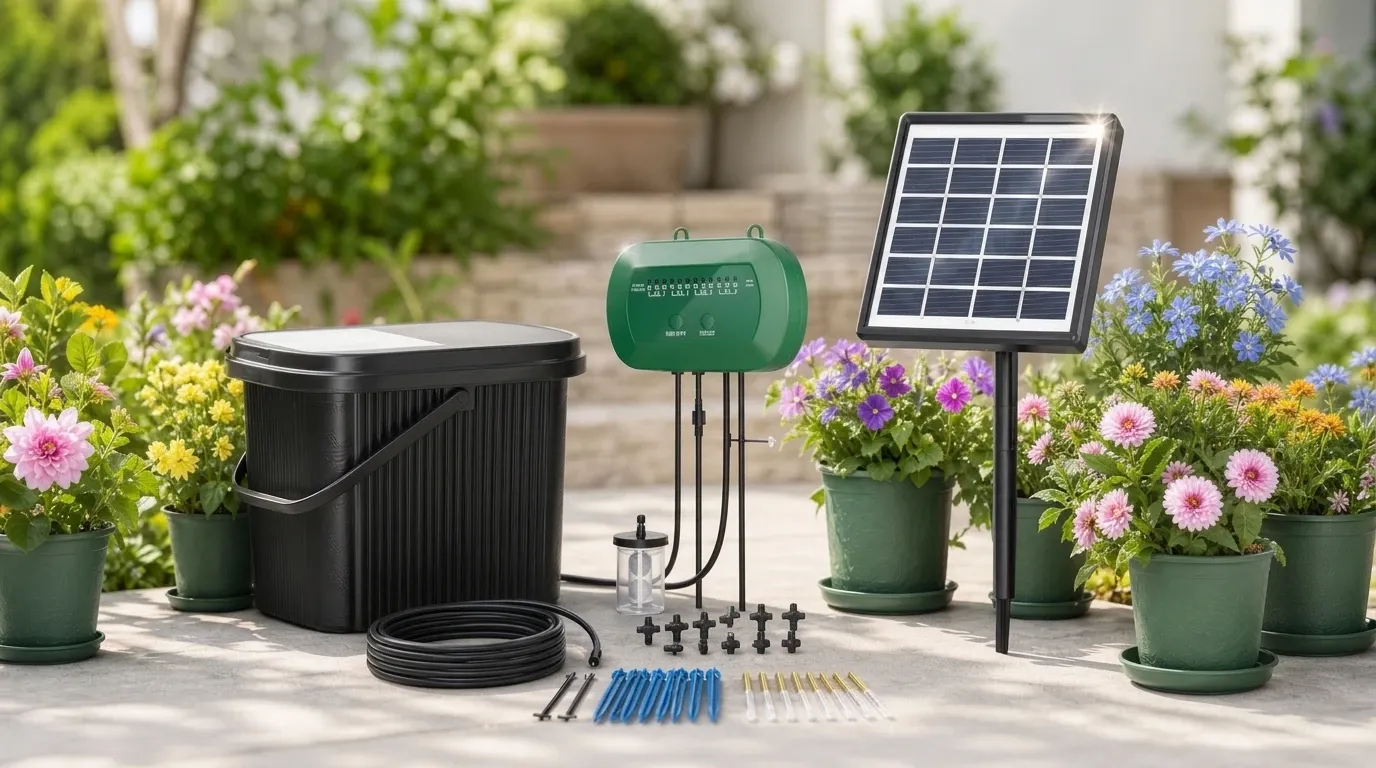
TL;DR: An automatic garden watering system waters plants on a set schedule using a timer, tubing and drippers, so pots, greenhouses and raised beds stay consistently moist with less effort. For many UK gardeners, a solar-powered drip system is one of the most practical options because it can run from a water butt or container without a tap or mains electricity.
An automatic garden watering system is a setup that gives your plants water automatically at set times, usually through drip irrigation, helping you keep pots, greenhouse crops, balcony planters and raised beds healthy with less daily watering by hand. In the UK, this is especially useful because weather can switch quickly from rain to warm, drying conditions, and therefore regular manual watering is often hard to maintain.
If you have ever come back from a weekend away to find drooping tomato plants, dry compost in patio pots, or greenhouse seedlings beyond rescue, you already understand the problem an automatic garden watering system is designed to solve. For many households, the real challenge is not watering a large lawn. Instead, it is keeping containers, raised beds, greenhouse crops and balcony plants consistently hydrated without relying on a nearby tap or mains electricity.
That is exactly where a solar-powered drip setup fits: practical, water-efficient and much easier to manage when you are out at work or away on holiday. At SolarSyste, the focus is simple: effortless solar drip irrigation for your plants. Based on our testing with UK-style container setups, a well-designed system can keep pots, greenhouse plants and balcony containers thriving while you are away, with no tap connection and no mains power required.
Key Takeaways
- An automatic garden watering system delivers water on a schedule, helping plants stay healthy with less daily effort.
- For UK pots, greenhouses and balconies, drip irrigation is usually more efficient than hand watering because it targets roots directly.
- Solar-powered systems are especially useful where there is no convenient tap or mains power supply.
- Look for adjustable flow control, timer settings, compatibility with water butts or containers, and easy installation.
- The right system can reduce water waste and make holidays or busy weeks far less stressful for plant owners.
What is an automatic garden watering system?
An automatic garden watering system is any setup that supplies water to plants without you having to stand with a watering can or hose every day. In practice, most systems use three core elements:
- a water source
- a controller or timer
- a delivery method such as drippers or irrigation tubing
Once configured, the system releases water at set times or intervals. The aim is consistency. Plants generally do better when moisture levels stay stable rather than cycling between very dry and very wet compost.
How does an automatic garden watering system differ from manual watering?
Manual watering depends on memory, availability and guesswork. As a result, it often leads to overwatering one container and missing another entirely. An automatic system replaces that inconsistency with repeatable scheduling and measured output.
Why are drip systems popular in the UK?
For British gardens and outdoor spaces, drip irrigation has become one of the most sensible forms of automatic watering. It applies water slowly near the base of the plant rather than spraying broadly. That matters for patio pots, greenhouse staging and balcony planters where precise delivery helps avoid runoff and wasted water.
If you want broader background on solar-powered options specifically, our pillar guide explains the fundamentals in more detail: The Ultimate Guide to Solar Powered Plant Watering Kit in the UK.
Why do UK gardeners use an automatic garden watering system?
The appeal is not laziness; it is practicality. Many British households juggle work commutes, school runs and travel while trying to maintain containers full of thirsty summer plants. During warm spells, pots can dry out quickly, especially in greenhouses or south-facing courtyards.
Does UK weather make automatic watering more useful?
The UK does not have a simple climate pattern for gardeners to follow. Conditions vary sharply by region and season. A hot June week in London can dry terracotta pots within hours, while windy coastal conditions can stress balcony planters even when temperatures look moderate on paper. Therefore, consistent automated watering can be far more reliable than reacting each day.
Can an automatic garden watering system save water?
This is not just about convenience. Watering efficiently has become increasingly important. According to Water UK, the average person in England and Wales uses around 142 litres of water per day at home. While garden use forms only part of this total, outdoor consumption can rise significantly during warmer months. Targeted irrigation helps reduce unnecessary waste by putting water where plants need it most rather than soaking paths or evaporating from exposed surfaces.
Is automatic watering better for plant health?
Irregular watering can lead to blossom end rot in tomatoes, poor flowering in containers and general plant stress. Based on our experience advising buyers for compact growing spaces, consistent low-volume watering often produces better results than occasional heavy soaking. For edible crops under glass particularly, routine matters.
What are the main types of automatic garden watering system?
What is a mains-connected hosepipe timer system?
These attach directly to an outdoor tap and automate flow through hoses or sprinkler attachments. They can work well where a tap is close by and press reliable. However, they are less suitable for people who want a neat solution for balconies, allotment corners or greenhouses positioned far from plumbing.
What is a gravity-fed garden watering system?
A gravity-fed setup uses elevation to move water through tubing into pots or beds. It can be simple and low-cost but may offer less control over pressure and distribution compared with pump-assisted alternatives.
How does a solar-powered drip irrigation system work?
This type uses a small solar panel to power a pump and timer arrangement that draws water from a butt, tank or container before sending it through narrow tubing to drippers around your plants. For many UK buyers with container gardens or greenhouses, this strikes an excellent balance between flexibility and ease of use.
A solar solution removes two common barriers at once: there is no need for mains power nearby, and no need for direct tap connection either. Consequently, it is especially useful for rented homes, patios without plumbing access and spaces where running cables would be impractical.
Which type works best for pots and greenhouses?
p>The strongest use case for this kind of automatic garden watering system is not necessarily a huge landscaped plot; instead, it is clusters of containers that need regular attention. Pots dry faster than open ground because they hold limited compost volume. Greenhouses intensify heat build-up on sunny days. Balcony planters are exposed to both sun and wind. A controlled solar drip arrangement directly addresses those realities.Ready to automate your watering with {brand_name}?
Shop The Kit — £76.07